
Running a business changes what your strengths are being asked to do
Strengths-informed coaching for founders when what you’re good at, what energises you, what others rely on you for and what the business needs next are pulling in different directions

When you run your own business, being capable gives you enormous range. You can solve problems, respond quickly, learn what is needed and keep things moving.
But over time, the business can begin to organise itself around what you are able and willing to carry.
Being able to carry something doesn’t necessarily mean it should keep shaping how you work.
How this work often begins

Founders come to this work for different reasons. You may recognise one of these patterns, or several at the same time.
When too much is competing for your attention
There may be no shortage of useful things you could be doing, but it is getting harder to decide what deserves your time and energy.
When something important keeps not happening
You know something matters, but familiar, urgent, meaningful or energising work keeps winning your attention.
Sometimes you do not yet have the information, structure or space needed to work out what comes next.

When too much still comes back to you
Clients, customers or team members may keep returning to you because you are trusted, capable, or simply the person who knows how to make things work.
Some of that responsibility may belong with you. Some may have accumulated because the business has learned to rely on you, or because there is not yet a reliable alternative.


When you need somewhere to think about the whole picture
You may have colleagues, advisers, family or professional networks and still not have a space where someone can help you see the whole pattern of you, your work and the business.
You may want challenge and perspective without somebody taking over or telling you how to run things.
Specialist support from someone who understands your world
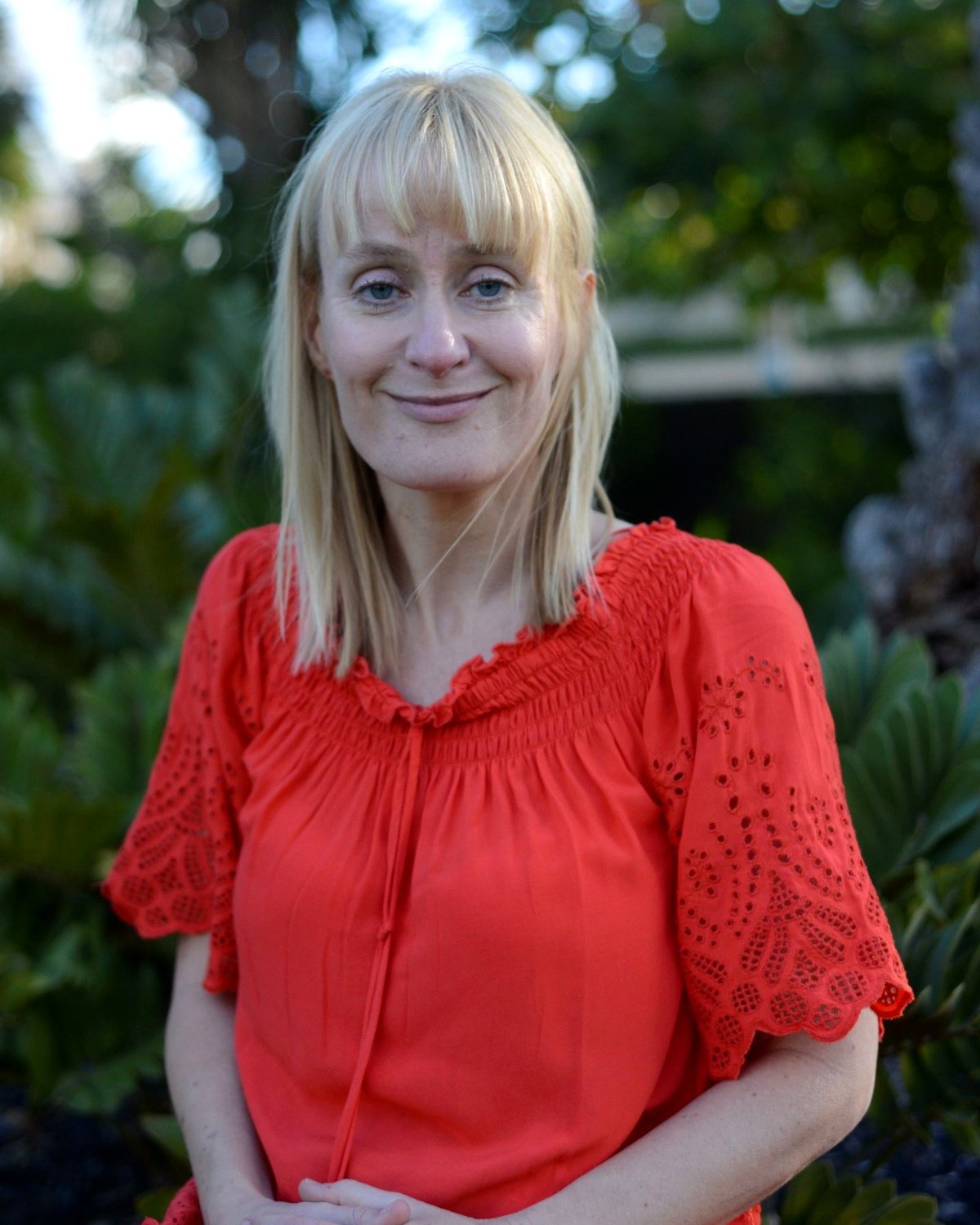
I know what it is to build a business around work you care about, while being the person ultimately responsible for what happens next. I run Optimising Strengths myself, so many of the questions founders bring to this work are ones I recognise from the inside.
I also bring more than 25 years across social work, clinical practice, education and professional supervision. Strengths-based practice has been part of that foundation throughout, and for the past 11 years I have studied and applied strengths in greater depth.
My role is not to tell you how to run your business. It is to help you step back far enough to see what is shaping the way you are working, what still needs you, and what may need to change as the business evolves.
Ways we can work together

Similar patterns can arise for different reasons. You may be doing something because you’re highly capable at it, or because meaningful work keeps winning your attention. Responsibility may have stayed with you because there isn’t yet a reliable alternative. Or saying yes may have made sense at the time, with the cost only becoming visible later.
That’s why the useful starting point isn’t automatically to do less, delegate more or set firmer boundaries, but to understand what is shaping the pattern in your situation.
From there, we look at what needs your attention, what has become yours by default, and what needs to be protected or made room for.
Founder coaching and professional supervision are two distinct ways of working together. You can start with either and move between them later if your needs change.

Founder coaching
A good fit when you want to focus on a particular question, transition or pattern through a more defined piece of work.
It begins with a strengths assessment (Skills Discovery) and a one-to-one debrief, and can continue into a longer coaching process depending on what you want to explore.
The assessment gives us a shared starting point, and further sessions give you space to try something small, learn from what happens and keep refining how you work.

Professional supervision for founders
A good fit when you want regular space to think about what is emerging for you and the business over time.
Professional supervision is an ongoing reflective conversation about your work, your role and the business you are building.
You set the agenda. I bring a strengths-informed lens to the conversation.
What founder coaching can explore
Understanding what is shaping the pattern is an important starting point. The Skills Discovery debrief is a reflective conversation rather than simply a walkthrough of your report. Coaching creates space to explore what those insights mean for you, your work and the business you are building.
You might use founder coaching to explore:
where your time and energy are going, and what important work keeps being displaced
what the business has come to rely on you for, including what still needs your involvement and what has simply accumulated
what the business is asking of you now, and what you need from it
a transition, decision or question about your role, confidence, relationships or direction
Sometimes the work is developmental and reflective: making sense of why a pattern persists, building greater trust in your own judgement, or becoming clearer about what matters now and where you want your attention to go.
Where change is useful, we work with small experiments rather than dramatic changes. That might mean changing how you approach a necessary task, drawing on a strength differently, or involving someone else earlier. The aim is to learn from what happens and decide what, if anything, to adjust next.
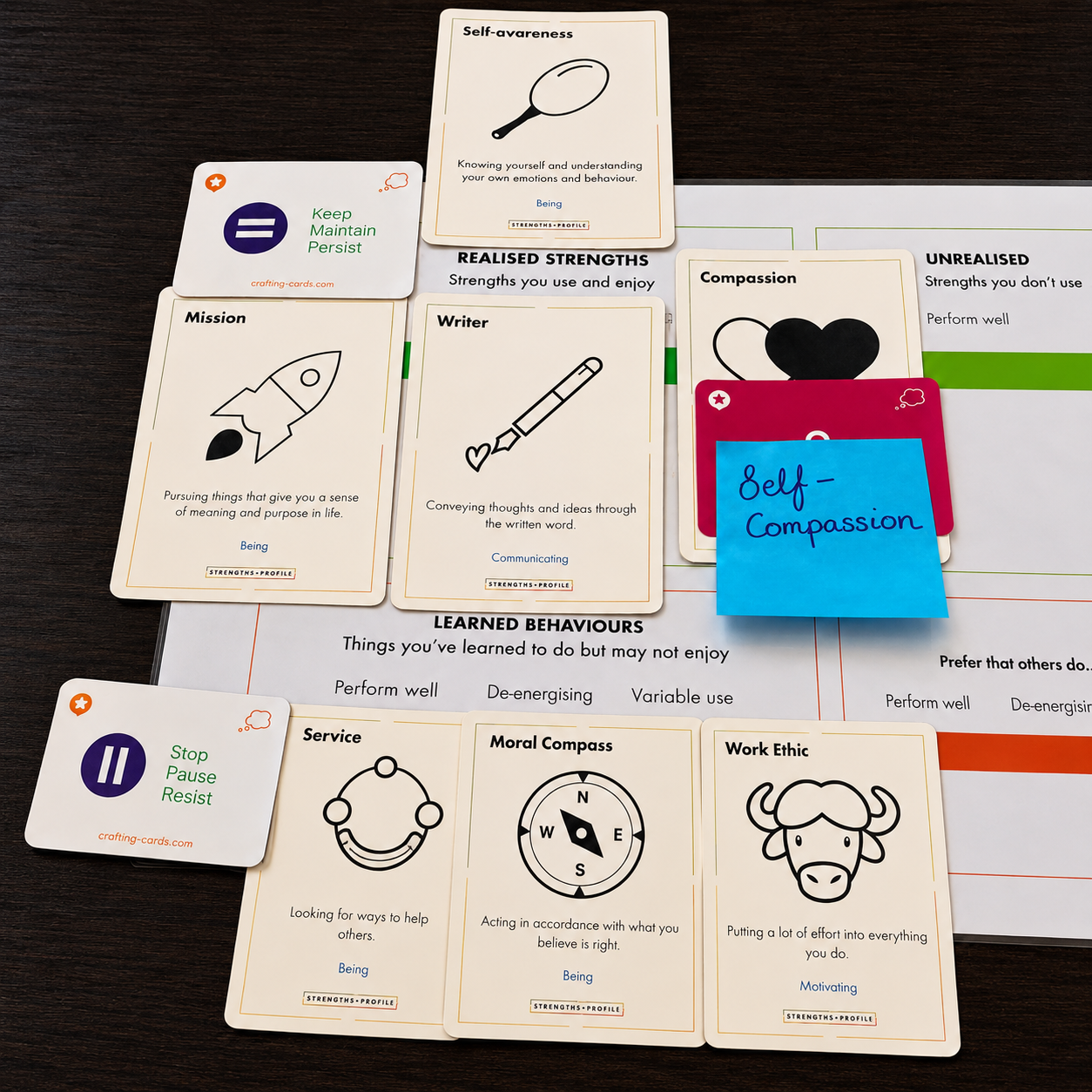
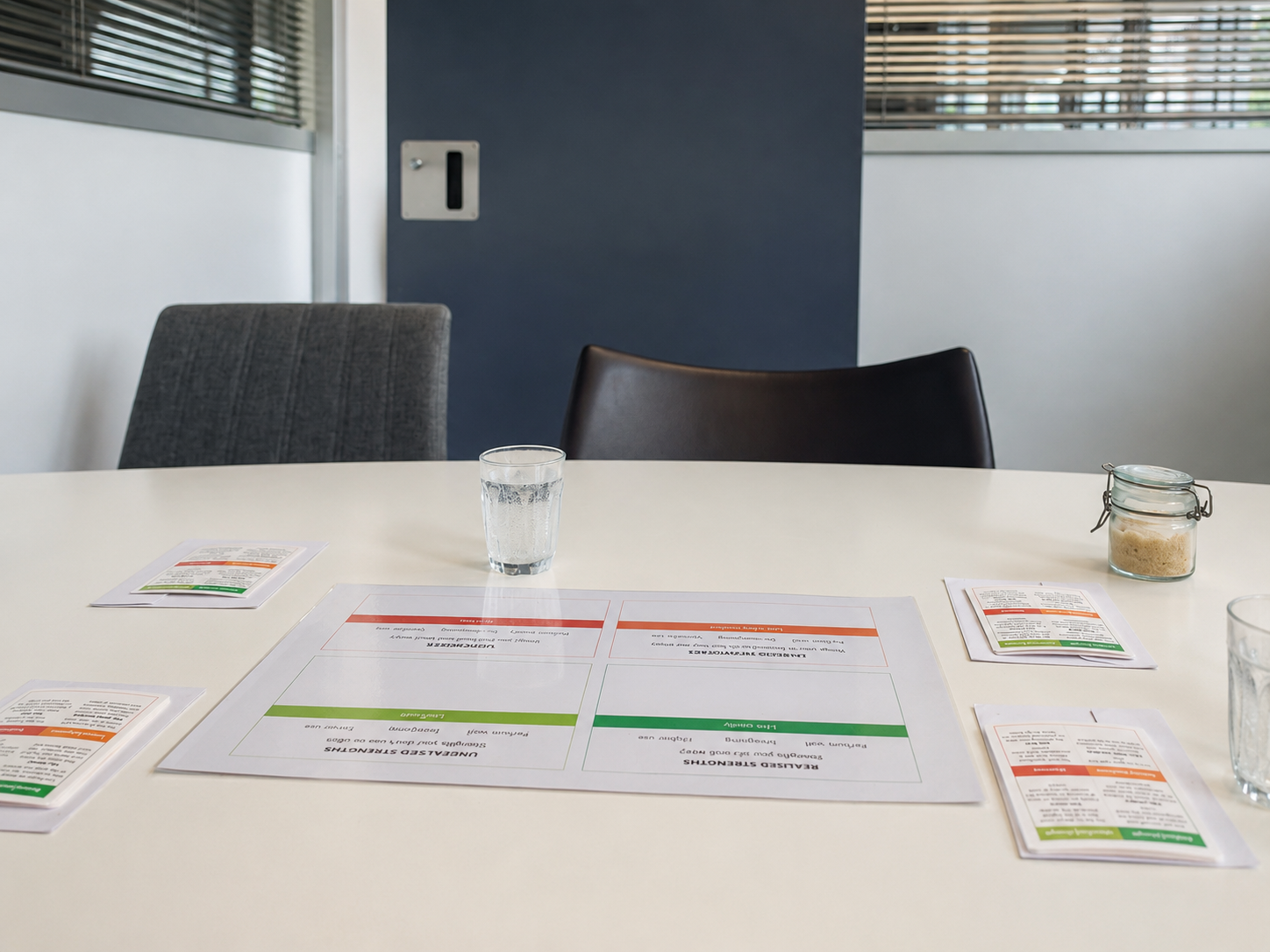
Strengths Profile cards © Capp & Co Ltd 2026. Crafting cards © Tailored Thinking / At My Best 2026.
FOUNDER COACHING
Which level of support is right for you?
The shape of the work depends on what you're navigating and what would be most useful right now.
The focus is how you are working within the business and what it is asking of you, rather than business consulting on strategy, marketing, sales or operations.
All founder coaching options include both the Skills Discovery Expert and Leader Profiles, a preparation call, analysis of your profiles before we meet and a one-to-one debrief. What differs is the level of support available to explore what emerges, experiment where useful, and integrate what you learn over time.


1
Debrief
For when you want a clearer picture of what's going on for you before deciding what to do about it
A one-to-one debrief to make sense of your Expert and Leader Profiles and what stands out for you in how you work and run the business.
✓ Expert & Leader Profiles ✓ Preparation call (30 mins) ✓ 1:1 debrief session (60 mins)
Includes
2
Anchor
For when you know something needs to change, but you're not yet sure what to try first
Builds on the debrief, with two further coaching sessions to explore what you want to focus on, choose a small, practical experiment, and learn from what happens.
Includes
✓ Everything in Debrief ✓ 2 additional coaching sessions ✓ Strengths crafting resources ✓ Guided reflection resources

3
Integrate
For when you're in the middle of something that isn't going to resolve quickly, and want support as you work through it

Provides four further coaching sessions to reflect on what is changing, try small adjustments, and learn from what happens. The additional space allows you to keep refining how you work and where responsibility sits.
✓ Everything in Debrief ✓ 4 additional coaching sessions ✓ Strengths crafting resources ✓ Guided reflection resources ✓ Light email support
Includes
Investment in founder coaching starts at $594 including GST for the Debrief package.
Additional travel costs may apply for in-person coaching.
Two perspectives on your strengths
Both profiles are included in founder coaching because they offer different but complementary perspectives.
The Expert Profile gives a broader view across all 80 skills, looking at performance, energy and use. This gives us a richer starting point than simply identifying what you are good at, helping make visible what energises you, what you rely on heavily, what may take more from you, and capabilities you may use less often.
The Leader Profile looks at how your strengths show up when you lead, including potential risks when strengths are overplayed. For a founder, that can include how you lead yourself, work with others and lead the business, whether or not you currently lead a team.
We consider both profiles alongside your role, responsibilities, relationships and the circumstances of the business. Rather than treating the results as an explanation of you, we use them to understand how your strengths and energy are interacting with what is happening in your work and business, and what may be worth exploring further.
Specialist strengths training
My work draws on advanced training in Strengths Profile (now Skills Discovery), including Master Practitioner accreditation and completion of the Strengths Profile Leader Programme.
“I completed a strengths-based profile and coaching session with Sharon from Optimising Strengths, and it gave me a much deeper awareness of my strengths and how to get the most from them. It really helped me refocus across my career, my business, and my roles within Contemporary Coordination.
My goal was to find how I could make my work more sustainable, enjoyable, and energising. Over the past 11 months, I’ve made several changes, and this coaching really helped me reach a much better place to continue the important work we do without compromising my own health and wellbeing.”
- Rachel Lafain, Senior Social Worker | Director, Contemporary Coordination

What happens when you start?
1. Complete the assessment
You complete the online Skills Discovery assessment, which usually takes around 30 minutes and gives you both your Expert and Leader Profiles.
3. Make sense of what stands out
Your debrief is a reflective conversation, not simply a walkthrough of your reports. We explore what stands out across your strengths, energy and patterns of use, and what it means for your work and business.
2. Prepare for the debrief
We have a 30-minute preparation call to talk about your role, the business and anything you particularly want to explore. I also review and analyse your profiles before we meet.
4. Build on it with further sessions
With Anchor or Integrate, further sessions build on what emerges, giving you space to explore more deeply, try something where useful and learn from what happens.
Professional supervision for founders

Ongoing reflective support as you and the business evolve
Professional supervision is a regular, ongoing space to step back from the day-to-day and think about your work, your role and the business you are building.
What you might bring
You might bring a difficult decision, a client or relationship issue, changing demands in the business, questions about workload or responsibility, something that keeps coming back to you, or your own role, development or wellbeing.
The strengths lens helps you explore:
how your strengths and energy are shaping the way you work and run the business
where reliance on you has grown around what you do well
what still needs your involvement, and what has become yours by default
what you may need to hold, share, change or approach differently
How the conversation works
Some conversations need more space to think, others more structure, challenge or a clear outside perspective, and we adjust as we go. I offer different ways of making sense of what you're noticing, and we test them against your own experience rather than assuming the first explanation is right.
Over time, supervision helps you notice patterns earlier, develop clearer judgement about what stays with you, and, where useful, adjust how you work as the business changes.
When a practical change is needed, we can start with a small experiment, such as changing what happens when someone brings you a problem, shifting where a decision sits, or protecting time for work that needs your attention rather than your availability.
What it looks like in practice
You do not need to arrive with a clearly defined goal. You may begin with something specific to think through, or more broadly with what the business is asking of you.
Sessions last 60 minutes, and most people meet monthly, although you choose how often.
Skills Discovery is part of my strengths-informed approach to supervision and is typically introduced within the first few sessions. If something more pressing needs attention, we begin there and introduce it when the time is right.
It is used as one lens among others to explore how you work, where responsibility sits, and what may be shaping the patterns you bring. It also helps me tailor the pace, structure and style of our conversations to your strengths and preferences. Skills Discovery is priced separately from supervision.
For social workers, supervision can also be structured to meet AASW CPD requirements.
Ready to explore founder supervision?
Book a 30-minute conversation to talk through what you’re navigating in the business, what you want space to think about, and how we could work together.
Frequently asked questions
-
Founder coaching is a more defined piece of work. It starts with your Skills Discovery profiles and a question, pattern or decision you want to understand, and can move into small experiments where change would be useful.
Professional supervision is ongoing and agenda-led. You bring what is on your mind, and the value builds over time as we notice what keeps returning.
Both use the same strengths-informed lens. You can start with either, and you don’t need to decide before getting in touch. The complimentary 30-minute conversation is a good place to work out what would fit best.
-
No. You may begin with a specific goal, challenge or decision, or simply with a question or pattern you want to understand better.
If the starting point is less clear, coaching can help you make sense of what is happening and clarify what may be worth exploring. In supervision, you bring whatever is on your mind, and the direction can emerge over time.
If you already have a clear goal, we can use a strengths-informed lens to support progress towards it.
-
The online assessment takes about 30 minutes and gives you both your Expert and Leader Profiles.
Founder coaching begins with a 30-minute preparation call and a one-hour debrief. Anchor adds two further one-hour sessions to work with an area that emerged from the debrief. Integrate adds four further one-hour sessions over a longer period, with light email support and room to run, review and adjust experiments over time.
Professional supervision sessions are one hour. Most people meet monthly, although you choose how often. More frequent sessions can be useful when you are newer to running a business.
-
Skills Discovery gives us a shared, structured starting point for noticing patterns that can be difficult to see while you are immersed in running a business.
Because it considers performance, energy and use, it can help distinguish between what you do well and find energising, what may have more to offer, what you do well at greater energetic cost, and where a different approach or additional support may be useful.
The profile does not determine what should change. In coaching, your profiles and debrief give us the starting point for more focused work. In supervision, it is typically introduced within the first few sessions and used more flexibly, as one lens among others. The profile can also help me tailor the pace and style of our reflection.
-
This work does not begin with the assumption that strengths should simply be used more, or that a heavy load means you should do less.
Similar patterns can come from different places. Two founders may both be carrying too much for different reasons, and what helps one may not help the other.
So we start by understanding what is shaping the pattern in your situation, then decide what, if anything, to change. Sometimes the insight is valuable in itself. Where change would be useful, it might mean changing how you use a strength, or how work is structured, supported or carried.
Finding the right starting point
Founders often arrive with a question they have been circling for a while, a pattern they are starting to notice, or a sense that something in the way they are working needs attention.
You do not need to know whether coaching or supervision is the right option before you get in touch. You can contact me in whatever way feels most comfortable, by email, phone or through the website.
A complimentary 30-minute conversation gives us a chance to talk through what you are navigating, consider which starting point may be most useful, and check that we are a good fit before you commit. If I am not the right person for what you need, I will say so.
Other ways to engage with this work

For Leaders
If you’re moving into leadership, or increasing responsibility means more is beginning to depend on you, explore leadership supervision and coaching.

For Organisations
Explore how strengths, responsibility and reliance shape leadership practice, team dynamics and the conditions that support more sustainable ways of working across your organisation.