
What your strengths can tell you about work
Explore what work might suit you, or what could make the work you already do a better fit

Why strengths?
Something you do without thinking can be a real skill. You might be the person who brings people together, works out why something keeps going wrong, or finds a way to make a complicated task easier. When these things come naturally, it's easy to overlook what you bring.
Understanding what you do well and what gives you energy can help you see more possibilities in the work you do now or the work you're considering. It can help you recognise what you'd like more room for and what you might want to change. Those possibilities can come from skills you've developed at home, through study or while volunteering, as well as in paid work.
Research has linked using your strengths at work with feeling more engaged and satisfied. In my work, I've found that starting with strengths gives people something concrete to build on. Once we can name what they do well and understand what they enjoy about it, we can look for ways to make that part of their working life.
The same task can feel different
You might be good at organising an event and love working out how all the pieces fit together. Someone else might be equally good at it and get most of their energy from bringing people together. Understanding what each person enjoys about the same activity can point to quite different possibilities for work.
That's why I pay attention to what you do well, what gives you energy and how often you get to use those skills. Skills Discovery gives us a way to explore those questions. Talking through examples from your life helps us understand what the answers mean for you.
What Eliza noticed about planning
Eliza had worked as a school social worker. As she considered what she wanted from her next professional role, we looked together at three strengths profiles she’d completed over almost four years.
One change stood out. In her first profile, planning was a skill she did well and found less energising at the time. By her second profile, it showed up as a strength she found energising. In her third, it was her highest-ranked strength.
As we talked it through, Eliza noticed how she’d come to use planning to look after herself.

“I plan in a way that is energising for me… I’m actually planning for happy… I plan out my week so I know I’m exercising… I don’t think I was doing that previously.”
- Eliza, social worker
The profiles showed a shift. Eliza’s example helped us understand what it meant in her everyday life. She was drawing on a skill she already had to make room for things that mattered to her.
What can you do with what you learn?
Something can give you energy while you’re doing it and still leave you needing time to recover. That’s why I also ask what helps you recharge.
Job crafting means making changes to your tasks, working relationships or how you go about your work. What you can change depends on your role, the support available and who has the authority to make the change.
Strengths crafting uses what you know about your strengths, skills and energy to explore what could help you work well over time. We start with something that matters to you. That might mean using a strength differently, asking someone for support or changing when or where you do a task. If there’s a change worth trying, we choose a small step and see what you learn from it.
If you’re looking for your first job or exploring a return to work, the same approach can help you think through what kinds of work might suit you and what support would help you do that work well.
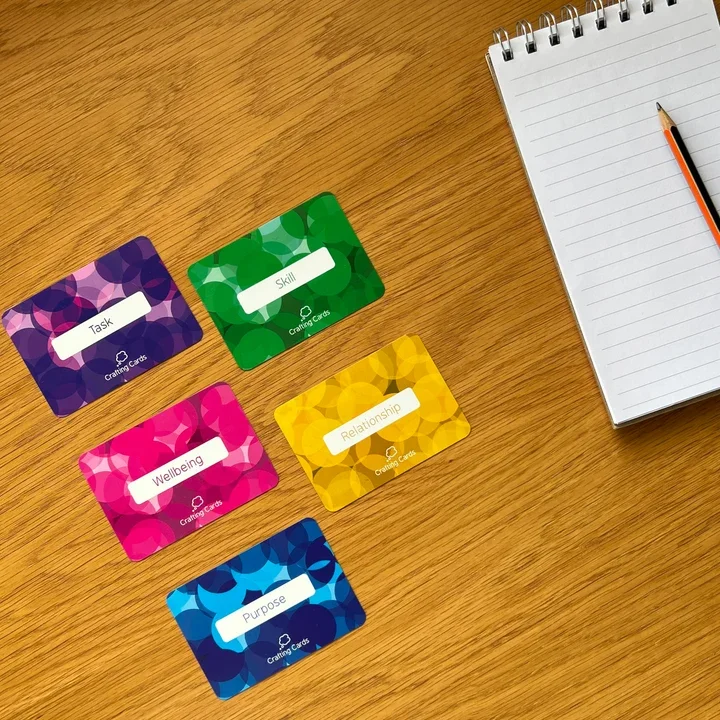
Crafting cards © Tailored Thinking / At My Best 2026.
Strengths crafting in action
Exploring your first job
You might tell me about a time you enjoyed helping at a community event. We’d look at what you did, which parts gave you energy and what helped you do them well. You might realise that you enjoyed welcoming people one at a time and that knowing what to expect made a difference. That gives us something specific to explore.
If there's a role that you're curious about, a practical next step might be visiting a workplace or talking to someone who does that work, so you can see what it involves and decide whether you'd like to take another step.
Running a business
You might bring a few recent requests you said yes to. Together, we’d look at what made each one worth taking on, where strengths like Service or Personal Responsibility played a part, and what you had to set aside to make room.
You might notice that some requests were work you genuinely wanted to do, while others left you carrying more than you’d intended. If there’s a pattern you want to change, we’d choose one situation in which to try a different response, then see what it made possible for you and the business.
Where this applies
For NDIS Participants → Strengths-based employment coaching
Explore work that might suit you, take a step towards a work goal, or consider what could help in a job you already have.
For Leaders → Coaching and professional supervision
Reflect on what your work asks of you, how to lead sustainably and where you can bring a strengths-based approach to your team.
For Founders → Focused coaching packages and regular reflective coaching
Explore a challenge that matters to you and try ways of working that suit you and your business.
For Organisations → Leadership and team development
Use strengths to inform how you develop people and shape the way work gets done.
If you have a question about this approach or are wondering whether it might be a good fit for you or someone you support, I’d be happy to hear from you.
Frequently asked questions
-
Skills Discovery, formerly Strengths Profile, is a questionnaire developed by Cappfinity. It asks about your performance, energy and how often you use different skills. Talking through the results helps us understand what opportunities you've had to use those skills and what has helped or got in the way. In employment coaching, we can explore your strengths in other ways if the questionnaire isn't right for you.
-
A debrief gives you time to make sense of the results in light of your own experience and what you want from the conversation. We can look at what feels familiar, what surprises you and what you might like to try.
In a small study by Roche and Hefferon (2013), only three of the 20 participants had taken a specific action after reading their report. After a structured debrief, every participant had agreed goals or actions, and participants described how talking it through helped them understand and use their results.
-
A review by Miglianico and colleagues found that strengths use at work was associated with work engagement, job satisfaction, wellbeing and work performance.